Doll and Me flutter sleeve pillowcase dresses

Doll and Me flutter sleeve pillowcase dresses

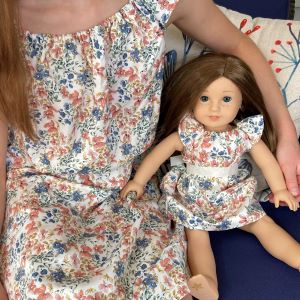
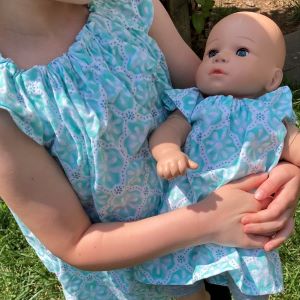
Learn to make matching flutter sleeve dresses for a child and her doll!

Our free pattern and step by step tutorial can help even the beginner to make these dresses (this can also be a very quick project for those with sewing experience). These dresses can be sewn entirely by hand. Our tutorial gives directions for hand-sewing stitches (with video tutorials on each stitch!), but if you are using a machine, a straight stitch can be used. Pillowcase dresses can also be used as nightgowns.

doll and me dress
doll and me dress
doll and me dress

Why pillowcase dresses?

Starting with pillowcases allows some of the major seams to be completed without any work. This makes sewing a dress for a beginner a much easier and faster project.

Some tips for selecting the pillowcases:

1.  We recommend using standard size cotton pillowcases. Standard size tends to be 20″ by 30″ or 32″. If you would like a longer dress, you could consider adding some extra fabric or wide lace to the bottom when you finish the dress. If you would like to select a king size pillowcase (typically 36″ long), just check that it is 20″ wide. Sometimes king size pillowcases are narrower than standard size pillowcases. If the pillowcase is narrower than 20″, the dress may be too narrow to wear comfortably. 

2.  If picking a pillowcase with a  patterned fabric, be sure the pattern will be in the right direction for the dress. An overall pattern that does not have a clear horizontal or vertical direction might work best. The pillowcase as a dress will hang down vertically (rather than the horizontal direction as used on a bed).

3.  Make sure the pillowcase you select is a woven cotton (not a stretchy jersey knit). The pillowcases we used in the photos and videos for this tutorial were from Laura Ashley (200 thread count breathable percale cotton pillowcase set) and Threshold (400 thread count performance pillowcase set).

Our tutorial begins with instructions for making the doll dress. The dress is designed for an 18″ doll (such as an American Girl or Our Generation doll), but the pattern can work for other dolls as well.

Starting with the doll dress will allow the beginning seamstress to practice and perfect her stitches before attempting child-size clothing.

Stitches will need to be stronger and smaller for child-size clothing that will likely be washed and worn more often.

doll and me dresses

Ready to make some really sweet dresses?  Let’s get started…

We recommend reading through the entire tutorial before beginning the project.

Gather your supplies…

Note: We have just updated this post (August 2024) with Amazon links for supplies. It is not necessary to use these exact products, but we have added the links to help you to gather the supplies more easily. Happy sewing!

Let’s make a doll dress!

Step 1

Wash and dry your pillowcases. Iron the pillowcases well to remove wrinkles. Use only one pillowcase for all steps in this section. (Set one pillowcase aside to be used later for the child-size dress.)

doll and me dress pattern

Step 2

Print out the pattern pieces, then cut them using craft scissors. Do not use sewing scissors to cut printer paper, as doing this will dull your sewing scissors.

Step 3

Cut off the short side of one pillowcase opposite the opening. VERY IMPORTANT: Do not cut the side where the pillow would normally be inserted – this part will become the pre-finished hem of the dress.

doll dress pattern layout

Step 4

Fold the pillowcase so that the pattern pieces needing to be placed on a fold will be on a fold (not on the seams of the pillowcase). Place all pieces (doll dress, doll sleeve, and child sleeve) on the fold and make sure none overlap the seam (if so, refold fabric to have more room). Watch this video if you need help.

Step 5

Pin on the doll dress pattern pieces. If you are also planning to make a girl size dress, you should also pin on the child size dress sleeve pattern. New to pinning patterns? Watch this video. Carefully cut out the pieces. Remove the pins, and set the fabric aside.

Step 6

As each piece needs to be cut twice, flip the pillowcase over, fold the pillowcase again so that the pattern pieces can be placed on a fold (not on a seam). Pin on pattern pieces and carefully cut out the pieces. Remove the pins. Set aside both child size sleeves to be used later.

Step 7

Place the doll dress fabric right sides together and line up the edges. What does right sides together mean? Click here to watch our quick video.

Step 8

Pin the sides of the dress. How to place the pins? Check out this quick video.

Step 9

Draw a light pencil line 1/4″ from the edge of the left and right sides of the dress before you start stitching to keep your stitches straight.

Step 10

Using a backstitch sew a seam 1/4″ from the edge on the left and right sides of the dress. The back stitch allows the dress to hold together better than a simple running stitch would (however, a very young child or a beginner might want to just use a running stitch). Would you like to learn the back stitch? Watch this quick video.

Step 11

Find the doll sleeve pieces. With the help of an iron and a sewing gauge, iron the curved edge of each sleeve under 1/4″. Do not worry if it is not exactly 1/4″ inch, as the curve will make this challenging. (Children may want to ask an adult for help with the iron.) Watch this video for tips on ironing to a measurement.

Step 12

Using a running stitch, sew a seam about 1/8″ from the curved edge of the sleeve. What is a running stitch? Watch our video.

Step 13

Pin each sleeve to the dress as shown, right sides together. You may want to pin one part of the sleeve at a time, sew it, then pin another side. Watch this video to learn how to pin on sleeves.

Step 14

Using a backstitch, sew the sleeves onto the dress bodice, 1/4″ from the edge of the fabric.

Step 15

Press open the dress side seams and press the underside of the armhole opening down 1/4″.

Step 16

Using a running stitch, stitch the underside of the armhole opening about 1/8″ from the edge.

Step 17

Fold the seam allowances at the neckline/sleeve connections so that they all face the same direction (e.g. clockwise). Then use a basting stitch to keep them down (a basting stitch is like a running stitch, but you do not need to knot the thread, and you can pull out this stitch later). See this video for help. Baste the seam allowances from the neckline and down about 3/4″. Basting down the seam allowances in the same direction will make threading the elastic in step 20 easier.

Step 18

With the help of an iron and a sewing gauge, fold the neckline of the dress over 1/2″. Do not worry if it is not exactly 1/2″ inch, as the curve will make this challenging. However, a little more than a 1/2″ is better than a little less. (Children may want to ask an adult for help with the iron.) Pin down the fold to keep it in place.


Step 19

Using a running stitch, stich around the neckline, about 1/4″ from the edge. The fabric will wrinkle where it connects at the sleeves (this is okay). You can remove the pins as you sew. Leave a 1″ opening between where you start and stop your stitches. This creates a casing for the elastic. Leaving the 1″ opening is essential to be able to insert the elastic.

Step 20

Cut a 12″ piece of 1/8″ wide elastic. Attach a small safety pin to one end of the elastic. Thread the elastic through the casing, being sure to hold on to the other end of the elastic so that it does not get pulled all the way through. Once the safety pin makes its way all the way around the neckline, pull the elastic so that the end of the elastic comes out of the casing by a couple inches. Put the two ends of the elastic together and make a sewing knot. Watch our video for help with this step.

Step 21

Flip the dress right side out. Put the dress on your doll. Adjust the location of the knot on the elastic so that the neckline is right for your doll. Take the dress off of the doll, cut off any extra elastic from the neckline. Use a running stitch to stitch together the 1″ opening.

flutter sleeve doll dress

Step 22

Congratulations!  You just made a new dress for your doll!  If you would like, tie a piece of grosgrain ribbon around the waist line.

Have fun playing together!

Please note, as this is a hand-sewn project, it should be treated gently.


Let’s make a girl-size dress to match!

Step 1

If you have already made the doll dress, find the girl-size sleeve pieces that have been cut out of one of the pillowcases in steps 5-6.

If you did not make the doll dress first, follow the beginning steps for the doll dress (wash, dry, and iron pillowcases; print and cut out paper pattern pieces). Follow steps 3 to 6 of the doll dress instructions to cut out only the girl-size dress sleeves.

Step 2

Measure from the back of the neck down to the desired length of the dress (for example, to the knee or calf). Write down this measurement to save for another step.

Step 3

Lay the pillowcase on the cutting board. Place the opening (hemmed side – where the pillow would be inserted) of the pillowcase on the zero line of the cutting board.

Step 4

Cut off the top of the pillowcase (the part that is sewn shut on the opposite side from the pillow opening) so that your pillowcase becomes your desired length. Use your measurement from step 2 (in the example here, we wanted our dress to be 25 inches long from neck to knee). Or if you want to keep the full length of the pillowcase, simply cut off the smallest possible amount. To keep your cut straight, you may want to draw a line. Your pillowcase will now be open on two ends. The part you cut off will become the neckline. Very important: Do not cut the hemmed opening of the pillow case – the hemmed opening will become the bottom hem of the dress!

Step 5

Find the armhole template. (Choose size small/medium for sizes 4 to 9, and large/xl for sizes 10 to 14). Pin the template at the top left of the pillowcase as shown (with the curved side toward the center). Cut out the armhole. Discard the cutout fabric. 

Step 6

Repeat step 5 on the right side of the dress, but place the template face down (so that the curved side is again toward the center).

Step 7

Find the sleeve pieces.  If desired, use pinking shears to cut near the edge of the curved part of the sleeves (this may help to keep the fabric from unraveling when washed, but is optional). With the help of an iron and a sewing gauge, iron the curved edge of each sleeve under 1/4″. Do not worry if it is not exactly 1/4″ inch, as the curve will make this challenging. (Children may want to ask an adult for help with the iron.)

Step 8

Using a running stitch, sew a seam about 1/8″ from the curved edge of each sleeve. What is a running stitch? Watch our video.

Step 9

Flip the pillowcase inside out. Pin each sleeve to armholes of the dress as shown, right sides together. Sleeves need to be pinned on to each side of the dress, but only one side is shown here. Watch this video of pinning the doll dress sleeves for help.

Step 10

Using a backstitch, sew the sleeves onto the armholes of the dress bodice, 1/4″ from the edge of the fabric. Sleeves need to be sewn on to both sides of the dress, but only one side is shown here.

Step 11

Make a rolled-hem on the underside of each armhole by folding over the fabric twice by about 1/8″. Pin parallel to the edge of the fabric to keep in place. A rolled hem will keep the raw edge from showing under the arm.

Step 12

Make a running stitch very close to the edge of the underside of each armhole opening. 

Step 13

Fold the seam allowances at the neckline/sleeve connections so that they all face the same direction. Then use a basting stitch to keep them down (a basting stitch is like a running stitch, but you do not need to knot the thread, and you can pull out this stitch later). Baste from the neckline of the dress and down about 1 inch. This basting stitch will make threading the elastic in step 16 easier. Watch this quick video for help (it shows the doll dress, but has the same idea).

Step 14

With the help of an iron and a sewing gauge, fold the neckline of the dress over 1/8″ and press.  Then fold over another 1/2″. Do not worry if it is not exactly 1/2″ inch, as the curve will make this challenging. However, a little more than a 1/2″ is better than a little less. Note:  This step is slightly different than in the doll dress – folding over the fabric twice will make it so that the raw edge of the fabric will not been seen, and will be less likely to fray when washed. This double fold is more complicated than a single fold, but is important as the garment will be worn by a child, rather than a doll.

Step 15

Using a running stitch, stich around the neckline, as close to the lower folded edge as possible (to be sure that the 1/8″ fold gets stitched down). Leave a 1″ opening between the start of your stitching and your last stitch. This creates a casing for the elastic. Leaving the 1″ opening is essential to be able to insert the elastic.

Step 16

Cut a 30″ piece of 1/8″ wide elastic. Attach a safety pin to one end of the elastic. Thread the elastic through the casing, being sure to hold on to the other end of the elastic so that it does not get pulled all the way through. Once the safety pin makes its way all the way around the neckline, pull the elastic so that the end of the elastic comes out of the casing by a couple inches. Put the two ends of the elastic together and make a sewing knot. Watch our video for help with this step. This video shows the doll dress, but the same concept is used for the child size dress.

Step 17

Flip the dress right side out. Try on the dress. Adjust the location of the knot on the elastic so that the neckline is right for the child. Take the dress off, cut off any extra elastic from the neckline. Use a running stitch to stitch together the 1″ opening.

Congratulations! You just made a new dress!


Step 18 - optional

If you would like to define the waistline of the dress, grosgrain ribbon could be tied around the waist. Making a simple 1″ long stitch on each side of the dress at the waistline will help to keep the ribbon in place.

Another option to define the waist would be to create a casing with an extra piece of fabric, sew this at the waistline, and insert elastic.


Ready to get the pattern? Click here.

Looking for more fun doll ideas?

American Girl Doll Party Ideas

Host a doll party!

baby doll with knit hat

Knit a hat for your doll!

If you would like to know when we post new craft or recipe ideas, simply subscribe, by clicking here: SUBSCRIBE

Welcome to sparklesandsprinkles.blog


Audubon inspired French nature activities

Audubon inspired French nature activities

Audubon is a familiar name, especially for those who love birds.  But did you know that Jean-Jacques Audubon was sent to America as a young man to avoid having to fight in Napoleon’s war? Here in America he spent as much time as possible outside, observing and recording nature.

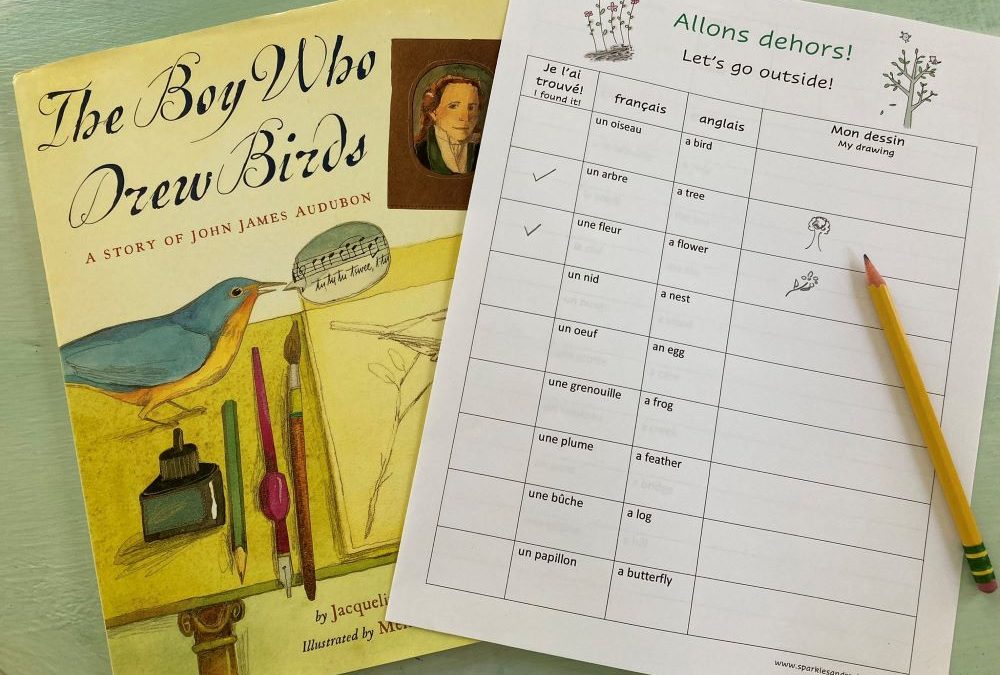
We love the book about the young Audubon, The Boy Who Drew Birds, by Jacqueline Davies, with illustrations by Melissa Sweet.  This book is in English, but provides a great jumping off point for a nature hunt in French.

In this post, we have a Free French/English nature scavenger hunt printable to get outside and learn French.  If the day is more of inside day for you, we also have some indoor ideas, like our nature matching game available on Etsy.

New to French?  No worries, we have clickable links to hear the nature hunt and matching game words!


Click on the image to hear the French word.

Ready to head outside? Print your FREE French scavenger hunt!

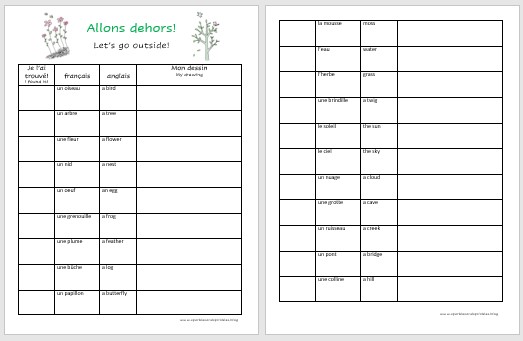
Click on the image to get your Free printable French scavenger hunt.  Children can check off the items they find and draw a small picture of each item.  Words are listed in French and English.

french scavenger hunt

Want to play?  Learn French with our Nature Matching Game!

Click here to get your own French – English Nature Matching game.  It’s an instant digital download, so you can play it today!  Just print, cut out, and play.  Have fun!

Get the French – English Matching Game on Etsy.


French English Nature Matching game

Love to draw? Create your own nature scene with French labels.

Children can draw a picture of a real nature scene or one that they imagine.  Then have older children use a dictionary to find the French vocabulary to label the scene in French. (An online dictionary could also be used.) Younger children can be told the words while an adult writes the words.

french nature sketch

We love learning French through picture books.  If you do too, check out our Paris Picture Book post.

Paris Picture Books

We also loving learning through singing!  If you do too, check out 123 Petits Pas… they have adorable songs in French… some about nature.

Bonne journée!

Have a beautiful day!

Note:  Some links on this page are Amazon Affiliate links.  Sparkles and Sprinkles is a participant in the Amazon Associates Program, an affiliate advertising program designed to provide a means for sites to earn advertising fees by advertising and linking to Amazon.com.

Other links may or may not be affiliate links.  We provide links because we have found these products or services beneficial, and we think you might too.

Ballerina Bunnies – drawing tutorial and coloring page

Ballerina Bunnies – drawing tutorial and coloring page

Our 11-year-old’s love of bunnies and ballet comes together in this post.  Follow along with her tutorial on how to draw a cute ballerina bunny.  Or if you prefer a coloring page, print our FREE Ballerina Bunnies coloring page.  These sweet bunnies are practicing their ballet positions and steps.  Have fun!

Click on the coloring page image to get your FREE printable of the ballerina bunnies!

Love bunnies too?

Meet our bunny and learn to make a flower crown bunny treat.

ballerina bunnies

Love ballet too?

Learn to make a ballerina sylph doll!

Have fun!

Ballerina Sylphs and Flower Fairies Tutorial

Ballerina Sylphs and Flower Fairies Tutorial

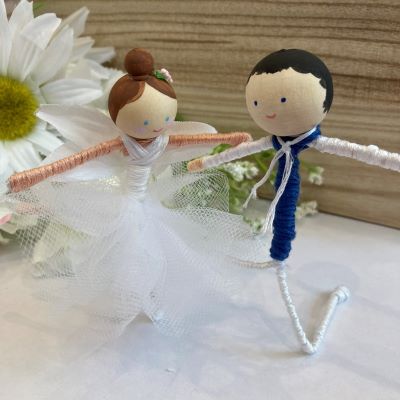
Inspired by the ballet, Les Sylphides, we decided to make some pocket sylph dolls.  They are so fun to make, and even more fun to play with.  Follow along to learn how to make your own ballerina sylphs, flower fairies, and poet dolls. Our YouTube video (see below) will guide you through each step.

les sylphides flower fairy doll
sylph and poet

These sweet little dolls may be tiny, but they require quite a long list of materials and tools. To help you in making these dolls, we’ve put together a detailed list of supplies, with clickable links. We found that the right materials are key to making these dolls.  Once you have the materials gathered, you and your children can enjoy making a variety of dolls. Each doll will be totally unique! 

Here is a list of the materials we used:

Floral Wire

Floral wire should be cloth covered, 18″ long, and 22 guage.  The guage is important.  We tried a different guage at first, and it was more difficult to bend.  Interesting fact – the higher the guage, the thinner and more easily bent the wire is.  22 guage seems a nice balance between easy to bend while making the doll, but stiff enough to keep its form when the doll is finished.  We found our floral wire at Hobby Lobby.  A similar wire can be found on Amazon.

Wooden Beads

We used 3/4 inch diameter wooden beads for the fairy doll heads, and 1/4 inch diameter wooden beads for the fairy doll bun.  For the poet dolls, we used 1 inch diameter wooden beads for the head.  This variety pack of beads works well.

Tools

For the tiny details on these dolls, we decided to get a fine tip hot glue gun. We think this type of glue gun is really helpful. This KeLDE glue gun comes with some hot glue sticks.  Hot glue sticks, of course, are also needed for the dolls. You will also need needle nose pliers, scissors, and ruler or tape measure.

Paints, paint brushes, toothpicks, and Q-tips

We used Apple Barrel acrylic paints to paint on the hair and faces. It is also helpful to have small paint brushes and toothpicks to paint on the small features of the dolls. We used Q-tips to paint the cheeks. Optionally, you may choose to apply a layer of Mod Podge to make the painted faces more durable.

Embroidery floss

We used skin-toned embroidery floss, as well as ballet pink for our fairy dolls.  We also used a variety of colors for the bodice of the fairy doll.  For the poet, we used skin tones, as well as white for the tights, and blue or black for the shirt. We like DMC floss, but a large variety pack of floss can also be nice to have on hand.

Model Magic or Wood Putty

To fill in the hole at the top of the bun of the fairy, or the head of the poet, we used Model Magic. You only need a tiny amount of Model Magic, but the extra can be used for so many other creative projects!  Wood putty could also be used.

Tulle (and a needle and thread)

For the skirts of our ballerina sylphs we used a roll of 6 inch wide tulle. You will also need a needle and thread.  For a no-sew version, simply use flower petals for the skirt.

Artificial flower petals

We used small artificial flower petals (such as daisy or hydrangea petals) for the sylph and fairy wings.  The flower fairy skirts are made from larger flower petals. We found our flowers at a local craft store.

And now… let’s make

Ballerina Sylphs and Flower Fairies!

Watch our YouTube video for step-by-step details on how to easily make ballerina sylphs and flower fairies.  (For tips on making the male poet dancer dolls, see below.)

If you would like to make the poet from Les Sylphides, follow similar steps to the fairies, but make it slightly larger.  Use a 1 inch bead for the head.  Make the arms 1.75 inches long.  Simply fold the ends of the legs to make little feet.  Use white embroidery floss for the tights and the sleeves. Use a blue or black embroidery floss to make the shirt.  Add wistful poet scarf with a small white or metallic piece of floss.  Ta da!  Ready to dance!

les sylphides doll poet

Would you like to be the first to find out when we post new craft ideas?  Sign up for our email updates!

Time to play with your fairies! Flutter… Dance… Have Fun!

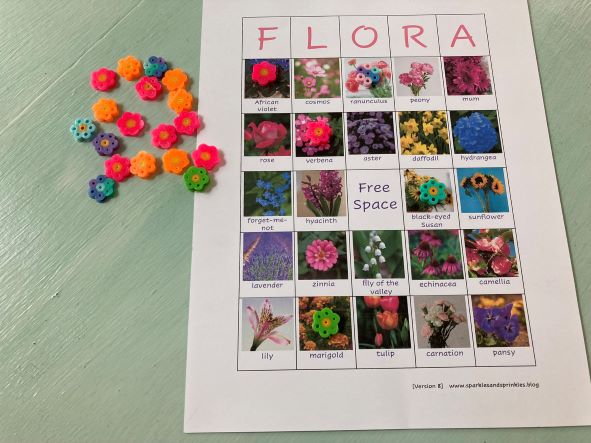
Looking for more springtime flower ideas? Check out our April Showers Bring May Flowers post.  You’ll find ideas for flower crafts, outdoor flower walks, May Day and Mother’s Day baskets, and even a Flower Name Bingo Game, perfect for a springtime party.

flower bingo

Note:  Some links on this page are Amazon Affiliate links.  Sparkles and Sprinkles is a participant in the Amazon Associates Program, an affiliate advertising program designed to provide a means for sites to earn advertising fees by advertising and linking to Amazon.com.

Other links may or may not be affiliate links.  We provide links because we have found these products or services beneficial, and we think you might too.
Homemade Easter Decorations that Last

Homemade Easter Decorations that Last

Making Easter decorations together that can last for years is a special treat!  In this post, we’ll show you how to make an Easter scene with peg dolls, hand painted wooden eggs, and an Easter garland.

Easter Story Peg Dolls

Our family really enjoyed creating an Easter peg doll scene a few years ago.  Having an Easter scene provides a tangible experience for children to imagine the details of the story of Easter, like a manger scene does at Christmastime.

We chose 2 3/8 inch size peg dolls, but you could choose any size. We loved looking at the ideas on Catholic Icing. for inspiration on how to paint the peg dolls. If you are not up for painting, Catholic Icing also has printable decoupage designs to make creating the peg dolls even easier.

Catholic Icing also has a very well done resurrection story that combines the multiple gospel stories into one to make it easier for children to understand the details.


easter peg dolls

We found that getting some extra peg dolls was helpful so that our toddler could paint the dolls however she wanted to while the older children and mom and dad worked on the details of the Easter figures.  She loved painting and playing with these dolls!

good friday peg dolls

We originally made our Calvary Hill and tomb using air dry clay.  We found that the clay crumbled over the years.  This year, we remade Calvary Hill and the tomb using Model Magic.  Modle Magic is much sturdier and lightweight, so we think it will hold up better to playing.


We used a plastic container for the base of the hill, then covered it with Model Magic. We then placed real stones on the hill, and secured a wooden cross into the clay.  Finally we pained the Model Magic and stones with a watered down light brown acrylic paint. For the tomb, we began with a cardboard structure, and covered it with Model Magic, then added rocks and paint. Our 4-year-old had so much fun placing the rocks in the clay! It takes quite a bit of model magic to make the tomb and Calvary Hill, so we recommend a large tub of Model Magic.

We also remade our crucified Jesus figure this year. (Once again, air dry clay did not hold up over the years, but we think Model Magic will.) We used a wooden bead for the head to make the head about the same size and look as the peg dolls.  We used floral wire to form the body, and then covered the wire in Model Magic.  In order to easily attach the figure of Jesus to the cross on Good Friday, we tied a string under the head that fits around the top of the cross.

peg doll jesus crucified

We wrap the Jesus figure in a small cloth and place the figure in the tomb on Good Friday.  On Easter Sunday morning, the children wake up to find the stone rolled away, and the tomb empty.  We like to hide the figure of the resurrected Jesus somewhere in the room so that the children have the experience of looking for Jesus, like his friends did on the very first Easter morning. We also place flowers near the tomb as a reminder that the tomb was in a garden… and to add even more Easter joy!

easter peg dolls

Painted Wooden Eggs

We made this set of nesting eggs many years ago, and it is still a favorite to display when we decorate.  Even the youngest children can decorate eggs… our newborn at the time used her fingerprints to make dots on the egg. It’s fun to paint names on the eggs, as well as the year the eggs were painted.  

To create your set of eggs, find a wooden egg set (or multiple sets) that allows each member of the family to paint at least one egg. 

We used acrylic paints to paint the eggs, and then gave them a coating of Mod Podge.

nesting easter eggs

The year my parents had their 12th grandchild, each grandchild painted a wooden egg, and we presented them with a carton of a dozen eggs on Easter.  We got two sets of these wooden eggs (which are already painted white).

Rather than use an old egg carton, we found cute colorful cartons to store and display the eggs.

Joyful Easter Banner

Catholic Easter Garland

Creating an Easter garland together can be fun, as each member of the family can create a part of it.  If you are looking for something simple, consider coloring our Easter hymn garland (an instant download on Etsy).  For full details on creating this simple, garland, click here. Or use your own ideas to create your own beautiful banner to celebrate Easter… so many possibilities!  Have fun!

Happy Easter!

Note:  Some links on this page are Amazon Affiliate links.  Sparkles and Sprinkles is a participant in the Amazon Associates Program, an affiliate advertising program designed to provide a means for sites to earn advertising fees by advertising and linking to Amazon.com.

Other links may or may not be affiliate links.  We provide links because we have found these products or services beneficial, and we think you might too.