
I distinctly remember sitting in my high school calculus class, and after the teacher explained a concept, a foreign exchange student in the class raised her hand and said, “That’s not how we do that in my country.” I remember being surprised by her comment. It was the first time it occurred to me that math might be taught in different ways in different places.
Homeschooling my children has continued to open my eyes to the many ways that math can be taught.
Having homeschooled for over a decade now, we’ve tried a number of math programs. In this post, we share with you some of the math programs we love. There are so many different ways to learn math, so we find that different curricula have been best for certain children and for certain times in family life. From spiral learning to online programs, from learning through stories to learning through crafts, here are some of the math programs we have used and loved… As there are so many concepts to learn in math, we’ll focus here especially on how each program teaches multiplication, to give a taste of the whole program. (And if you scroll to the bottom, we’ll go beyond multiplying and let you know our top pick for when children get to middle and high school.)
I give the “plusses and minuses” of each program, but please note, we love all of these programs, so there are not really “minuses” of any. Consider the “minuses” to be the challenges we found; however, what we found challenging might be perfect for others.
Math by Hand (creative math learning)
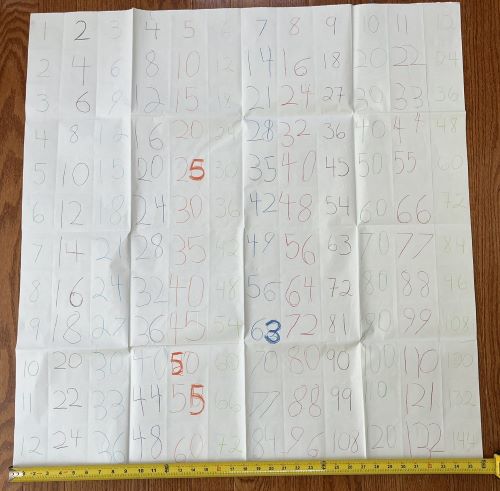
The picture below shows a multiplication chart we made when our oldest daughter was doing Math by Hand in 1st grade. This might be the biggest multiplication chart you’ve ever seen – yes, the ruler is in the picture to show it’s 36 inches by 36 inches! This chart hung on wall in our house for many years. What a great way to have a BIG reminder of the multiplication facts! The program came with this very large sheet of paper and directions for how to fold it to make the chart. The child actually fills in all of the numbers with crayon.
The plusses:
Math by Hand is so much fun, and a wonderful curriculum for families who love to be creative! When we used Math by Hand, we found ourselves learning finger weaving, putting on plays (about math characters!), making books about math, drawing pictures, reading stories, and having a wonderful time learning math together.
The minuses:
I found that Math by Hand could practically become our whole curriculum. That’s a bit of an exaggeration, but as Math by Hand is such a rich curriculum, I felt that we did not have time to do the whole program, plus do all of the other subjects as the children got older.
Life of Fred (math through stories)
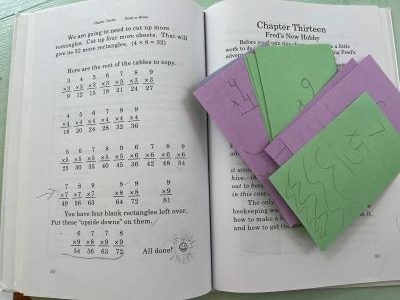
Life of Fred teaches multiplication through the main character, Fred, teaching his students. The program encourages students to create their own multiplication flashcards. Life of Fred makes memorizing the multiplication facts a bit less overwhelming, as it pairs down the facts that actually have to be learned and takes out the repeats (see image below).
The plusses:
Life of Fred is a very unique program. It is a joy to sit down and do math together, as each lesson is woven into the story of the main character, Fred (a very likeable 5-year-old university professor… yes, I said it was unique). As Fred teaches math to his students, and goes about his (very) adventurous daily life, math lessons are learned in the context of the story. I love how this gives children something to anchor their learning to (not just doing a math problem, but seeing the math problems in a “real” situation). My children were excited to do math every day when we used Life of Fred because they could not wait to find out what happened next in the story! Another plus is that even pre-school-age children look forward to listening to the stories in their big sibling’s math lessons.
The minuses:
Life of Fred does not like the idea of what it calls, “drill and kill.” However, extra practice problems might need to be added by the parent if the child seems to need some repetition. (Upper grade levels in the series do offer supplemental books of extra practice problems.)
CTC (online)
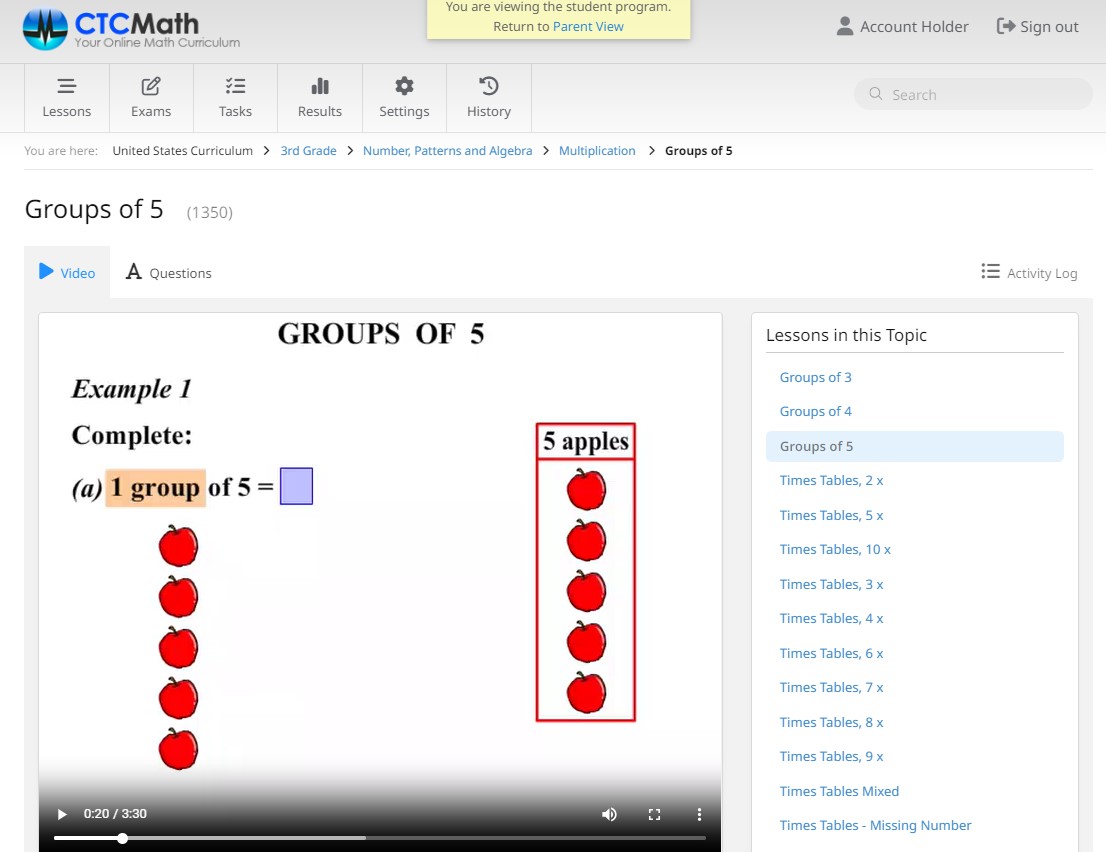
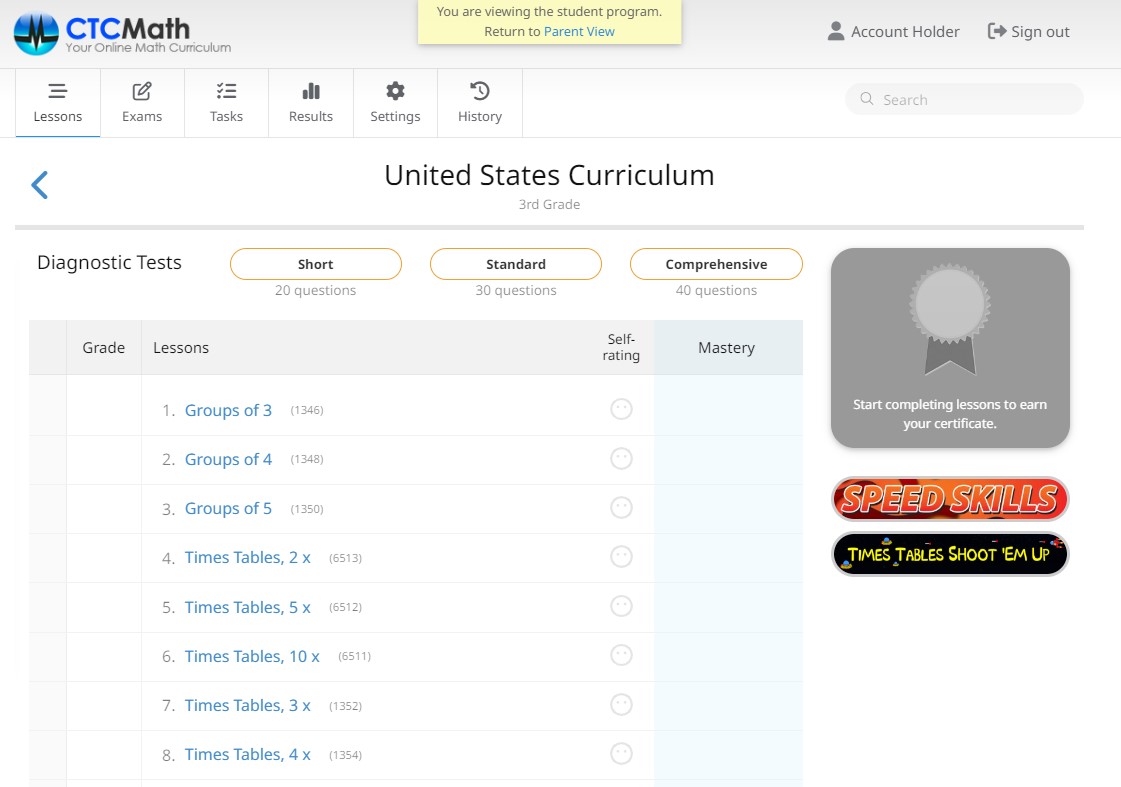
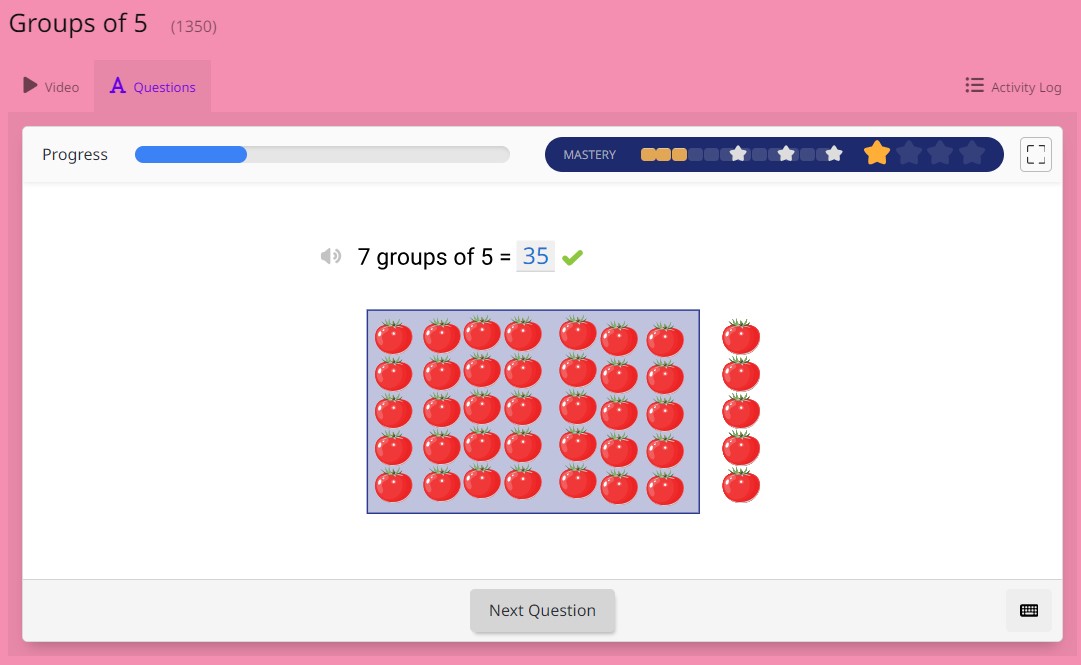
CTC is an oline program that children can use (mostly) on their own. Multiplication is taught with visuals (see images below). The program also offers online multiplication quiz games: “Speed skills” and “Times table shoot ’em up.”
The plusses:
In a season in life when we had a baby and older children, CTC was so helpful! CTC math is completely online. Short videos explain the math concepts, then children complete the math problems. The problems are instantly corrected with feedback given online. Record are kept of all of the scores and course progress automatically in a simple online system.
The minuses:
While having everything instantly corrected and records kept online is very helpful, we found the drawback of this system is that if the child gets stuck on a problem and the parent is not available to help at that time, the child either has to stop, or just move on without getting help. For some of my children, this was very frustrating. This is not a fault of the program, it’s just the nature of everything being online – it’s not possible just to circle the problem in the book and move on to the next one and ask for help later.
The Good and the Beautiful (spiral learning)
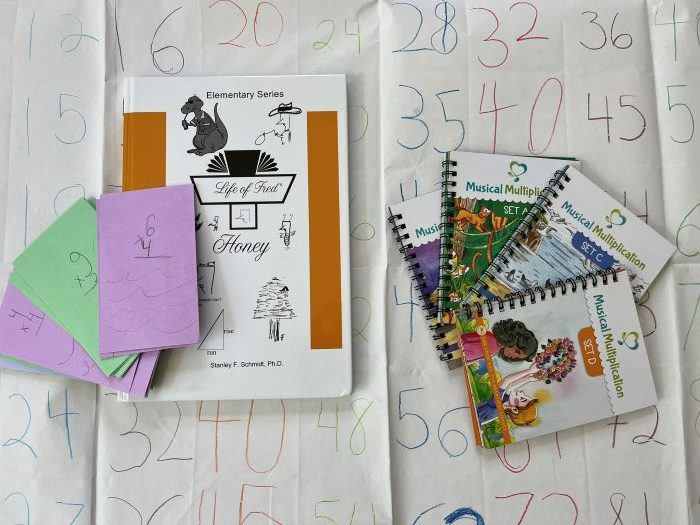
The Good and the Beautiful math program is true to its name. What more beautiful way to learn multiplication tables than with a lovely and image for each multiplication fact! The booklets are accompanied by peaceful songs to teach the multiplication facts, too.
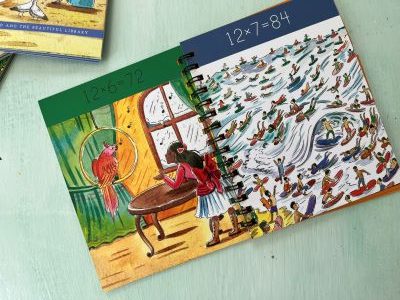
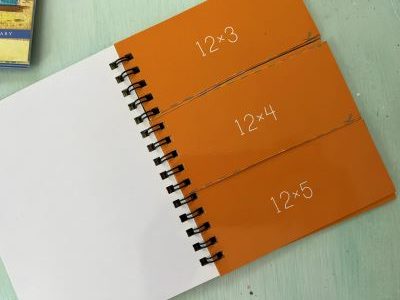
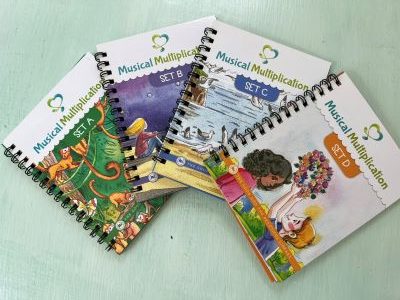
The Musical Multiplication booklets and songs come seperately from the grade level math programs. I was so delighted when I first opened up one of the grade level books… the books are truly beautiful. Filled with lovely watercolor illustrations to accompany the math problems. Just like the beautiful songs, the beautiful books don’t make math learning a breeze every day, but opening up a beautiful book is certainly a lovely way to be greeted by math problems each day.
The plusses:
- It’s beautiful! What a delight to be able to open up a math book each day and be greeted by lessons with lovely illustrations!
- This is a spiral learning program. What is spiral learning? Rather than simply doing a long unit on shapes, for example, and then moving to the next concept, concepts are introduced and then circled back to in future lessons, spaced out throughout the book.
- For the upper grades there are video lessons that introduce each new concept to the child. The teachers in the videos are cheerful and excited about math. They often use visuals in the lessons as well.
- There are 120 lessons in each book. For us this works really nicely, as we tend to do “book lessons” 4 days a week and then go to our homeschool group on the 5th day. We put about 120 days (with a few extra) of “book lesson” days on our school year calendar.
- My 5th grader just mentioned the other day that she also likes that the answer key shows mini images of the question pages, so it is easier to correct the work.
The minuses:
We find that in the upper grades (beginning in 5th grade or so) there are too many problems to fit into what we think is a reasonable amount of time to work on math each day. I find myself either telling my children to only do some of the problems, or they take two days for one lesson. I wish that the problems were arranged in such a way that there were “mandatory problems” and “if you need more practice problems.” I explain to my children that when I was in school, I remember the teacher sometimes assigning “just the even number problems” if there were too many in one lesson. They get frustrated and feel like they are not completing the lesson when I have them do just some of the problems, and yet doing all of the problems makes them frustrated because it takes too long. So my suggestion would be to have a talk with your child about what is expected (that they might not have to do every problem, and that’s okay). Or perhaps set a timer for the amount of time that math is in the schedule and just do the number of problems that fit in that time (this might mean taking more than one day on each lesson).
Climbing Higher (middle school and high school math)
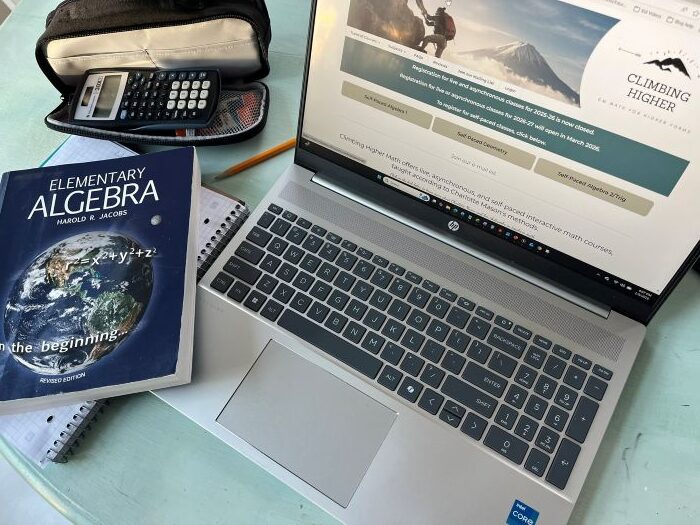
We are just beginning the journey into high school level homeschool math, and we are so grateful to have found the Climbing Higher Math program. This program is taught by wonderful homeschool moms who explain math in a beautiful way! For Algebra I, they use the book, Elementary Algebra by Harold R. Jacobs. I love this book… It reminds me of the books I used when I was growing up (in a good way!). It is simple and straightforward, while also encouraging students to really think about and understand the “why” behind the math they are learning.
Climbing Higher Math offers live classes, asynchronous classes, and self-paced classes. This variety allows for families to choose what is best for their children and family schedule.
I find that choosing a math curriculum is about so many things: the child, the parent, and the whole family. We love all of these math programs. The fact that we have moved from one to another just means that our life circumstances changed, so we looked for new math programs that suited each child at the time.
Praying for you as you and your children learn math together!
This post is dedicated to my dad. Though I was not homeschooled, I always say, “My dad was my math teacher.” I often did not understand what the math teachers were explaining in school, but I always knew I could come home and ask Dad. He joyfully explained math to me in a way that clicked. Thank you, Dad, for your help back when I was in school. Your example helps me as I teach my children today.
Note: Some links on this page are Amazon Affiliate links. Sparkles and Sprinkles is a participant in the Amazon Associates Program, an affiliate advertising program designed to provide a means for sites to earn advertising fees by advertising and linking to Amazon.com.
Other links may or may not be affiliate links. We provide links because we have found these products or services beneficial, and we think you might too.
